Course Correction
Considering a major course renovation? Then consider an accelerated timeline, which can speed up the process while limiting member disruption.
By James A. Frank, Senior Editor
HUNTER
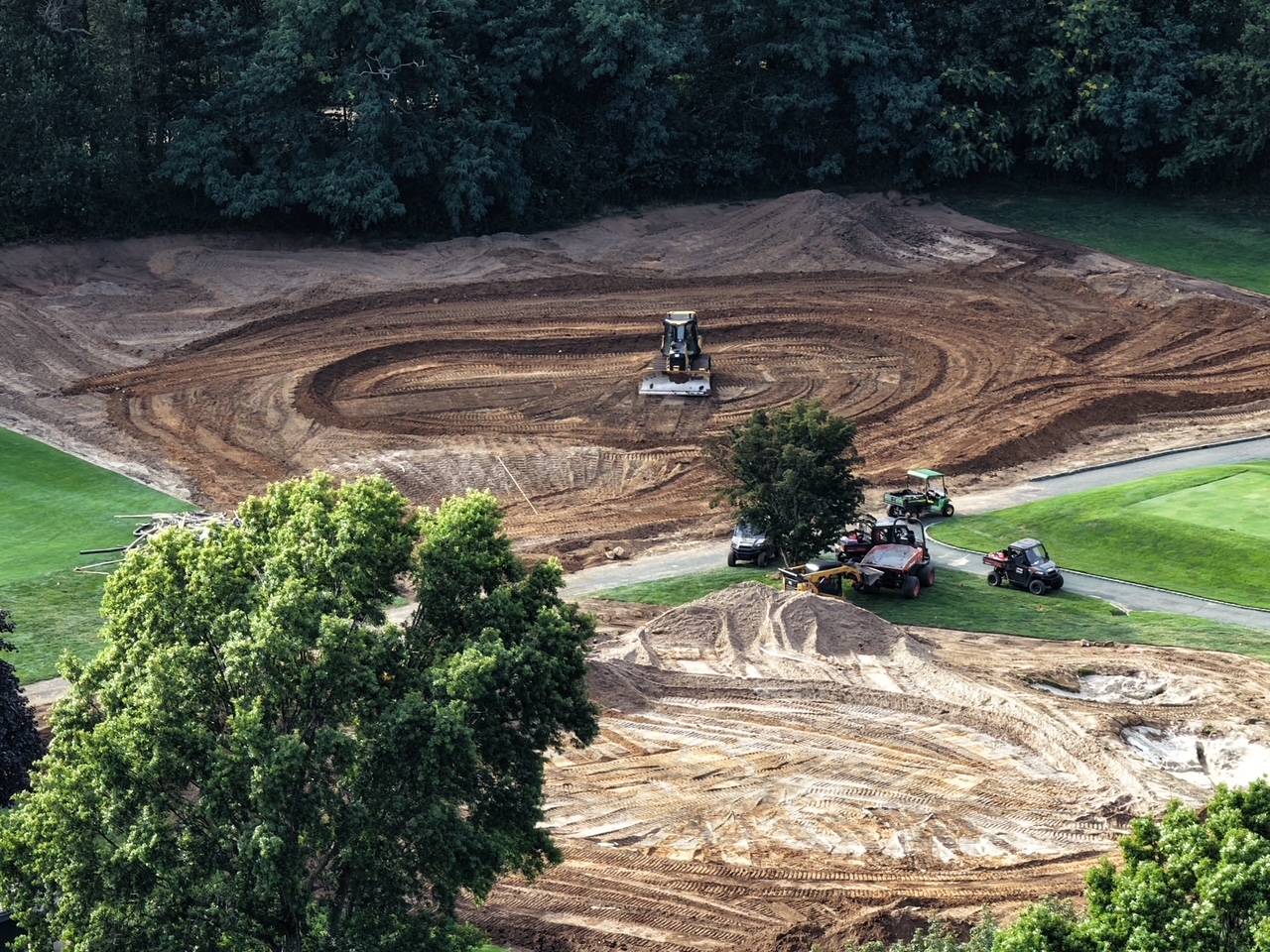
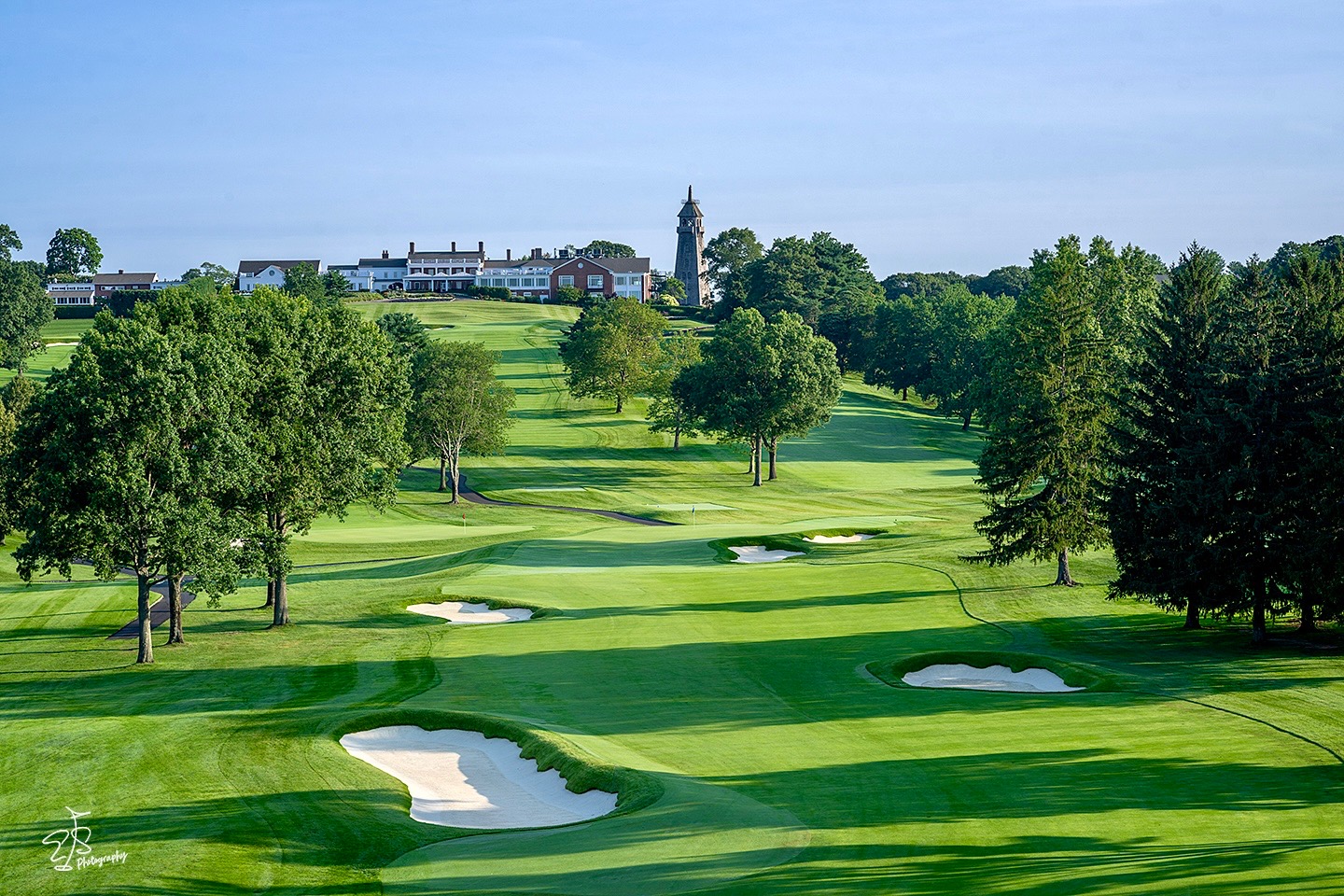
When Old Westbury Golf & Country Club in New York decided to renovate its 65-year-old, 27-hole course a few years back, its goals were what you’d expect: update the layout and its playability; modernize the infrastructure; and be prepared to welcome future generations.
More immediately, the Board of Directors had to satisfy the wants and needs of the current membership—including minimal disruption of play and strict oversight of the timeline and costs—which would have to vote on whether to approve the work.
How they were able to satisfy every criteria—starting in August 2025, finishing in just three months, and coming in $2 million under budget—can be a lesson for any Board considering a significant construction project while upholding its fiduciary and operational responsibilities.
What They Did
In the early 2000s, Old Westbury brought in various architects and consultants who made piecemeal fixes and course changes. But realizing that they weren’t doing the layout or the members much good, the Board opted for a full-scale renovation. More than a dozen architects were interviewed. Brian Silva got the job based not only on his pedigree and portfolio, but also on his experience turning projects around quickly.
“Brian had successfully completed several large-scale projects on accelerated timelines,” said Board President Mark Rosen. “That gave us confidence that with the right architect, construction team, planning, and accountability, it was possible to move much faster than the traditional nine-month projection.”
Even with the luxury of 27 holes, minimizing disruption to play was critical. The Board did a deep dive into construction planning, execution, and risk management, engaging industry experts and analyzing recent projects in the Met Area to understand what worked and what didn’t.
They also focused on creating the best possible process to present the project and address member concerns. The club analyzed member data to determine how many rounds were typically played during the proposed closure period, then worked aggressively with neighboring clubs to arrange reciprocity.
“Rather than holding one large membership meeting, we hosted three days of smaller fireside chats with the project team,” said Rosen. “The goal was to educate the membership, not sell the project. In the end, the strategy worked, and the project was approved by nearly 90% of the membership. The day after the vote, our first call was to Brian and our second was to place an order for 2.5 million square feet of sod.”
Silva told the Board only a few construction companies could do a quality job in the time stipulated. NMP Golf Construction of Vermont signed on, knowing exactly what was expected of them.
“The club wanted to be able to play with the least amount of disruption, so it became a well-coordinated dance,” said Darryl Bartlett, NMP’s Senior Manager. “We picked a corner to work in, picking the worst part first. That would be the lowest, wettest area, where we started in August, because that’s when it’s dry. Then we moved to higher ground as the weather changed.”
According to long-time Course Superintendent Tom McAvoy, between the construction company, irrigation installers, sod contractors, and others, sometimes more than 125 people were working on the course at the same time. They got lucky that it was a mild Long Island fall, allowing work to continue into November.
The project demanded military-like precision and planning, managing everything from parking and deliveries to housing, hydration, and meals for workers. The club regularly hosted on-site barbeques for the crews and even held a Thanksgiving dinner with entertainment for those working over the holiday.
The Board also engaged an Owners Representative—Richard Browne, managing partner of Sterling Project Development—who said he was there to help avoid the typical pitfalls clubs fall into when embarking on ambitious capital projects.
“When you’re dealing with a very tight timeframe, you have to plan, having the irrigation contractor, the pump station contractor, knowing the sod had been grown during the prior season and was ready,” explained Browne. “You had to have all those pieces in place long before you started moving dirt. We positioned the project very, very well from a preparation standpoint before we closed the course so that we could be efficient and very productive from day one.”
How You Can Do It
Working on an accelerated timeline is not a new concept. Silva remembers being on sites years ago and thinking, “If the construction company just added another six or eight guys, they could be done in a month.” More than 10 years ago, he was contacted by a club in Massachusetts that wanted to rebuild its greens and surrounds in two months. Despite telling them that it couldn’t be done, the club still offered him the job.
“I was right,” Silva recalled. “They couldn’t do it in two months. They did it in 44 days! It taught me that if you bid a job or go to a contractor and lay out the extent of the work and tell them they’ve only got two or three months, generally speaking, they’ll devote manpower and equipment to meet that schedule.”
“The first lesson is to select the right project team that has the requisite experience,” said Browne. “If you pick the right team, it very often preordains the outcome. Then, early on, set the proper expectations relating to budget and schedule, and get everyone’s buy-in.”
Not every architect or contractor wants to work quickly. For the architect, it means committing to being on site three or four days a week, keeping them from other jobs. Tom Doak recently turned down bidding to rebuild all 18 greens in two months on a top U.S. course. “Which is possible,” he said, “if I commit to spending most of my time there and having at least two of my key people there.”
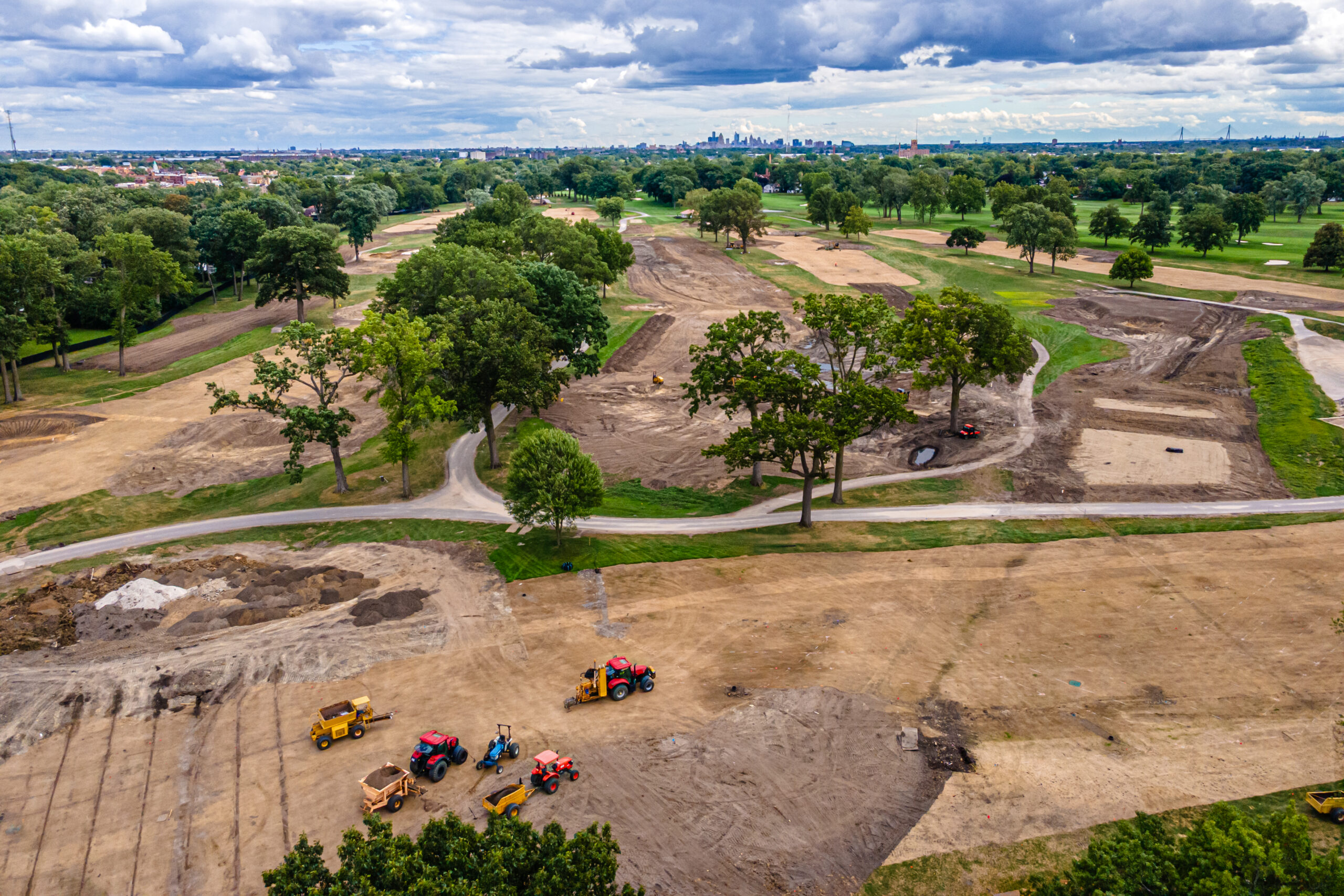
In the last two years, architect Tyler Rae oversaw a major redo of infrastructure as well as greens, bunkers, and tees at Detroit Golf Club, site of the PGA Tour’s Rocket Classic—what he called “a 10-month scope of work packed into a 5-month project”—as well as a similar, if smaller, four-month renovation at Mountain Lake in Florida. He sees both positives and negatives to tight timelines.
“The positives are we are on site more each week and have to make quick decisions,” said Rae. “Some of that stress is good for the project. We still have time to shape and hand-finish our putting surfaces and make sure they are world-class with all the detail work we’d expect.
“Negatives. The weather can be detrimental to the schedule and set you back. We only have time to build things once, and when adverse weather conditions hit the project, it can really slow down the production and kill team morale.”
Another schedule breaker is the club or architect that second-guesses decisions.
“It’s difficult for a member-run club, where you have so many opinions and governance is not always clear, but it takes a lot of discipline,” said Browne. “If you’re not in love with a decision that got made and you want to make a change, have the discipline to say ‘put it off’ and live with your initial decision for a season and then decide to make changes later.”
Asked Silva, “When you get a green to 98% of what you want, is getting that extra 2% worth another week?”
As for other keys to a successful project, everyone agreed it’s vital to start early. The consensus was to plan at least a year in advance, which gives all the players the chance to get organized and address contingencies.
“We’re doing a job in Florida and they didn’t know we needed a tree disposition plan when you cut, move, or replace trees,” said Bartlett. “And if you start putting more water into the ponds, they’re going to make you do drainage work on the canals. There’s a bunch of things that people don’t think of that need to happen.”
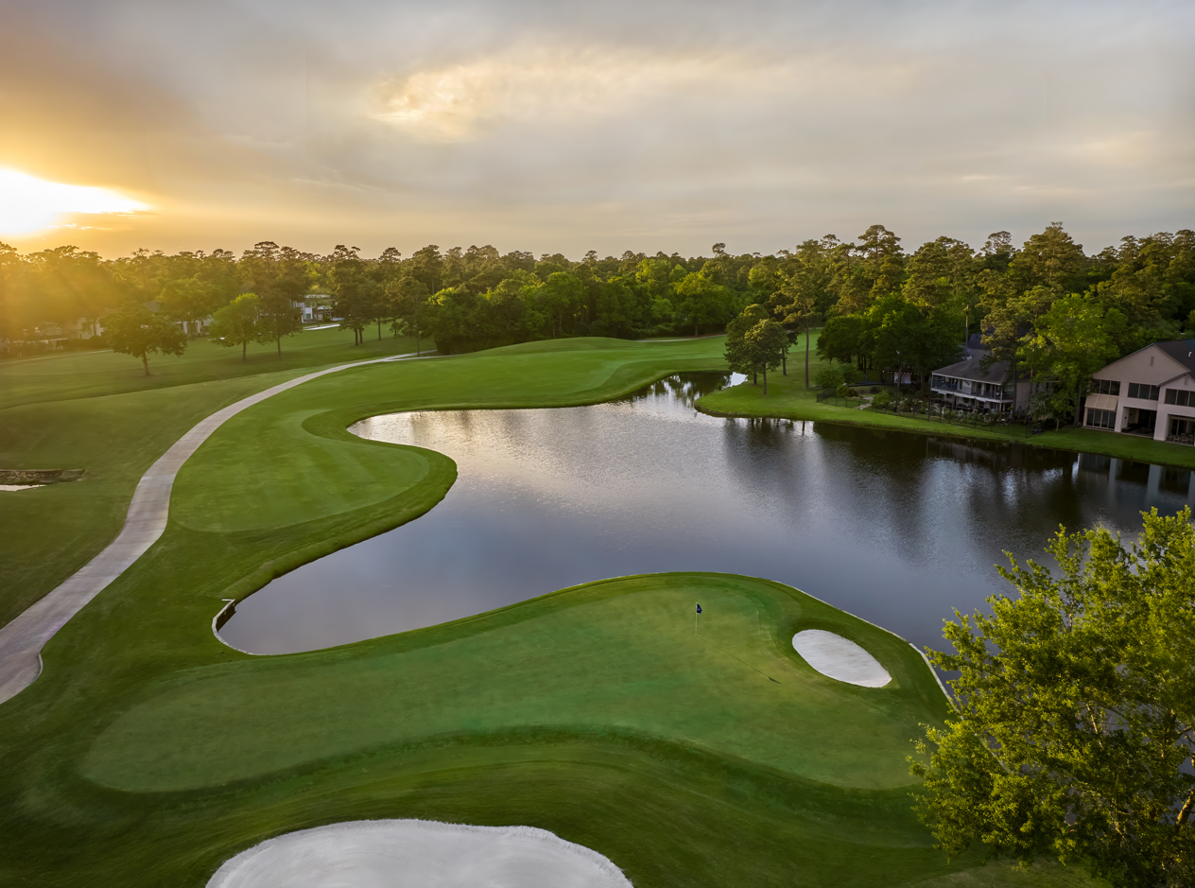
“Expect the unexpected,” advised Jim McPhilomy, Senior Vice President of Agronomy for Arcis Golf, which owns and operates 88 private, resort, and daily-fee clubs around the U.S. “You think you have a good plan, but as you start pulling up the layers you may find things you weren’t expecting to find. We were redoing bunkers and greens on The Players Course at The Woodlands in Houston, expecting to find gravel under the Better Billy bunker lines. Instead, we found concrete, and taking it up affected both the budget and the schedule. Build some flex time into the schedule.”
Rich LaBar, owner and president of LaBar Golf, one of the country’s biggest course builders, has extensive experience with accelerated projects, including the renovation a few years ago of Jack Nicklaus’ Muirfield Village Golf Club, which started as soon as the Memorial Tournament was over and was finished in time to host again a year later.
“You have to treat it as two nine-hole projects,” he explained. “Double the staff; it’s simple math. We usually put multiple managers on the job, too. Also, the architect has to buy in and be there a minimum of 2 to 3 days a week, if not every day. Jack came in every week so we didn’t wait for approvals.”
Time was even tighter this past summer at Chicago’s Rich Harvest Farms, said LaBar. “We’re on a 3-month schedule to do pretty much everything. We’re doing it basically as 3 sixes, with 3 managers and 3 crews. I can do that because they called a year and a half ago.”
Once upon a time, clubs would split an 18-hole renovation into nine holes a year. Today, few are willing to give up their full course for two years. Also, as Silva explained, it’s more expensive: “I’ve been doing this for 43 years and I want to find one year that golf course construction costs go down compared to the previous year.”
“A high-end private club with only 18 holes won’t be making any money,” said LaBar. “The pros aren’t making money, the restaurant, so they want to be closed as little as possible. Last May, we rebuilt the greens on Pinehurst No 4. Imagine how much money they lose every day when they’re closed—tee times, hotel rooms, shirts bought….”
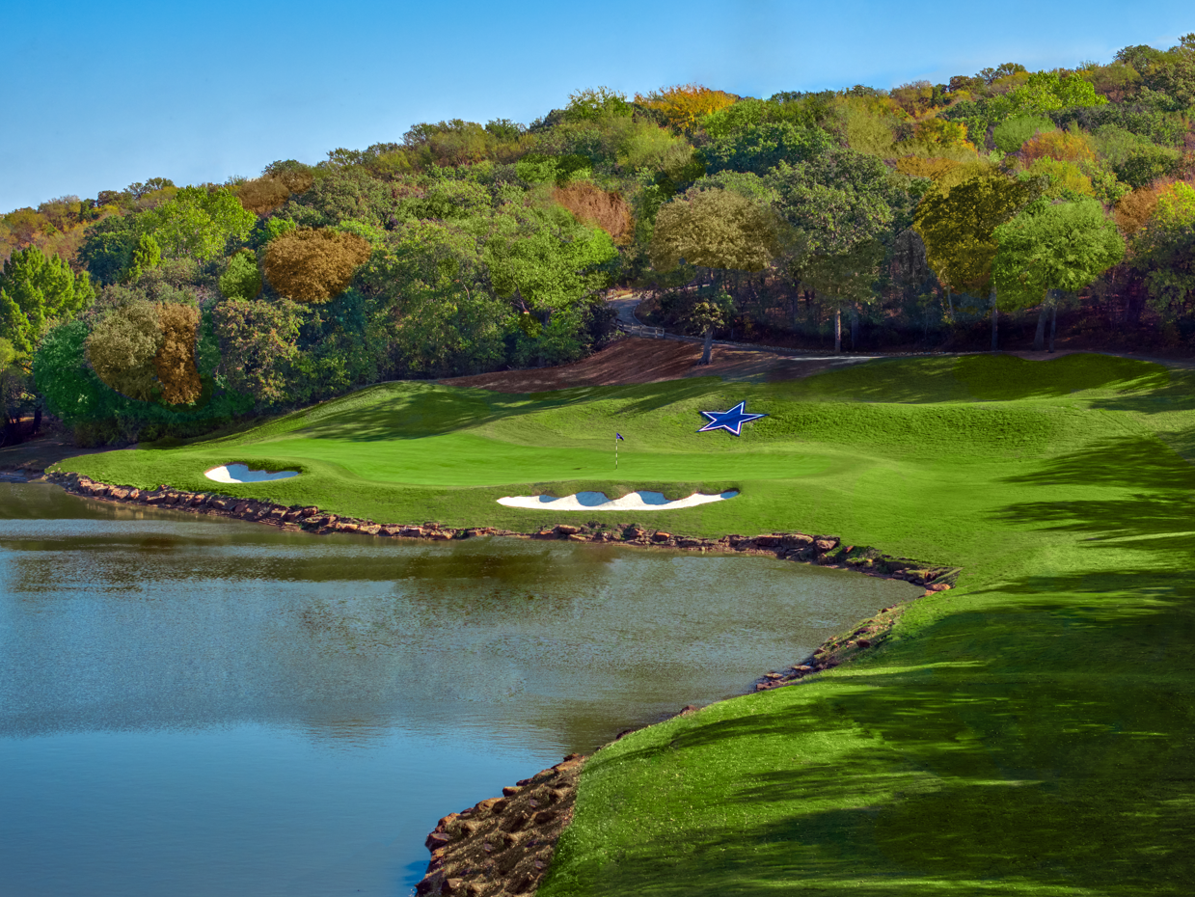
The same is true for a public facility, so when Arcis Golf did an extensive transformation of Cowboys Golf Club in Dallas—the world’s only NFL-themed golf club—as many as seven crews were working on different parts of the course and practice range at the same time. Work started at the beginning of June, was substantially done in early October, and the facilities opened for play in November.
“It’s all about schedule and planning,” said McPhilomy. “We have weekly meetings, always asking, ‘Where should we be at this point?’ If we fall two days behind, how can we make that up?”
“Doing a project piecemeal is very slow and cumbersome,” said Rae, “leaving the membership with a course in continual construction. Save your money and renovate or restore the course all at once.”
This article originally appeared in the Summer 2026 edition of Club Director, the official magazine of the National Club Association.